Over the past few weeks, I have been going through an introductory textbook on anatomy and physiology. I am currently on the chapter about tissues and just very recently learned more about epithelial tissues. Coincidentally, I was also somewhat surprised to discover that this topic bears some personal connection to me, which I will briefly talk about later.
In this post, let us go over what I’ve learned about what epithelial tissues are as well as their types.
Epithelial tissue, or epithelium, covers and protects surfaces both inside and outside of the body. There are mostly composed of cells with very little extracellular matrix in between them. The cells of the epithelial tissue are exposed in the apical or surface layer, and at the base of the tissue is the basal surface, attached to the basement membrane. Epithelial tissue is nonvascular. Blood vessels do not cross the basement membrane, so nutrients must be diffused or absorbed in order to reach the cells. Epithelial tissues are capable of regeneration.
The epithelium provides the surface of the body protection from wear and tear. For example, our skin and the epithelium in our oral cavities protect the structures beneath it from abrasion. It also allows selective transfer of substances through diffusion since it acts as a barrier (like the epithelium in the lungs and kidney). In addition, the epithelium is also capable of secretion and release of mucus and other substances onto its apical surfaces or into ducts.
Epithelial tissues are classified based on the shape and number of its cell layers.
There are four types of epithelial tissues based on the number of cell layers:
- Simple epithelium - single layer
- Stratified epithelium - two or more layers
- Pseudostratified columnar epithelium - a type of simple epithelium that has one layer of cells but appear as having two or more because the cells are tall
- Transitional epithelium - a special type of stratified epithelium; changes shape
Epithelial tissues have 3 types according to shape:
- Squamous - flat
- Cuboidal - cube-shaped
- Columnar - taller than it is wide
Under simple epithelium, we have the simple squamous, simple cuboidal, and simple columnar epithelium.
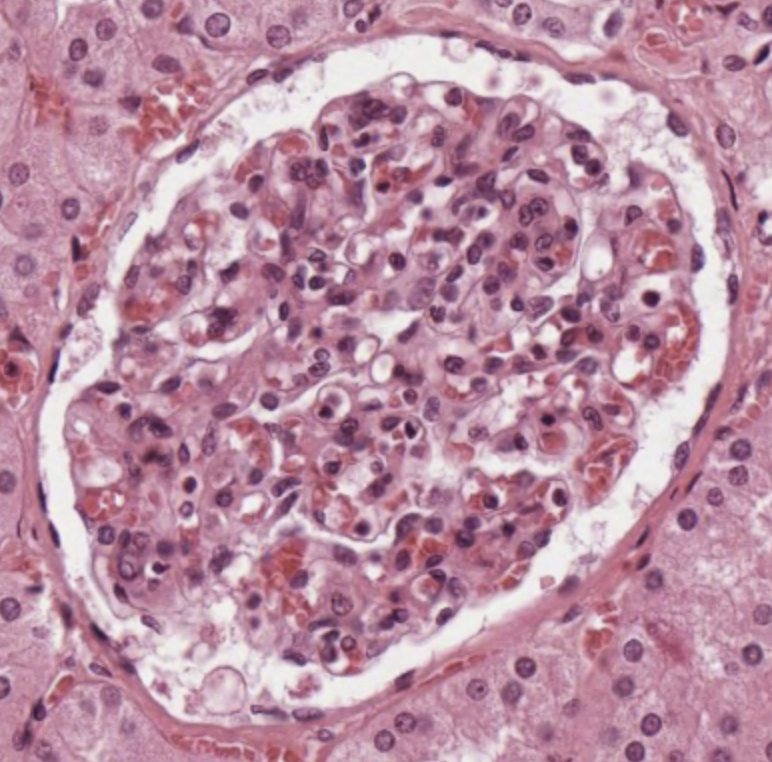
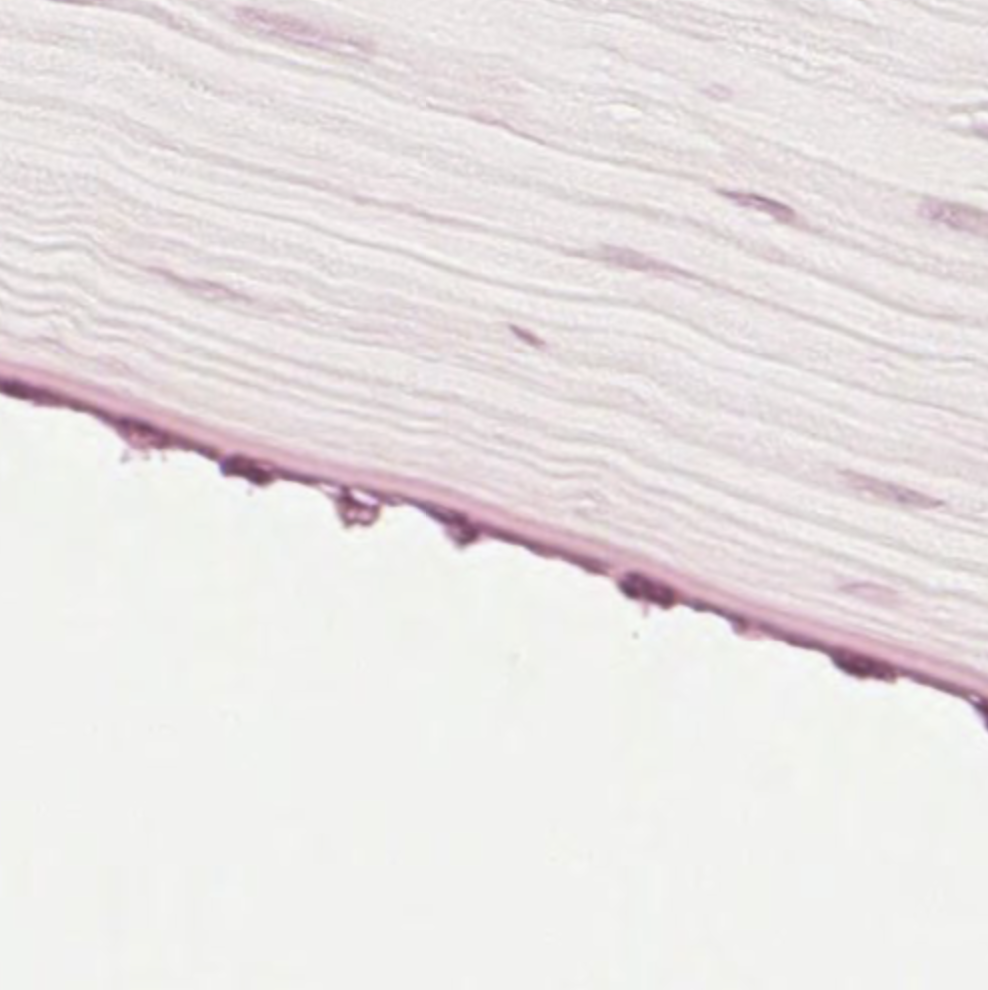
Simple squamous epithelium tend to be flat, horizontal and scale-like in appearance. The epithelium found lining the lymphatic and cardiovascular system is called the endothelium. The endothelium is a single layer of squamous epithelial cells and because of this thinness, it is mostly found where rapid passage of chemical compounds happens. The mesothelium is a layer of simple squamous epithelium that forms the surface of serous membranes lining the body cavities (pleural, pericardial, peritoneal) and inner surface of tympanic membranes.
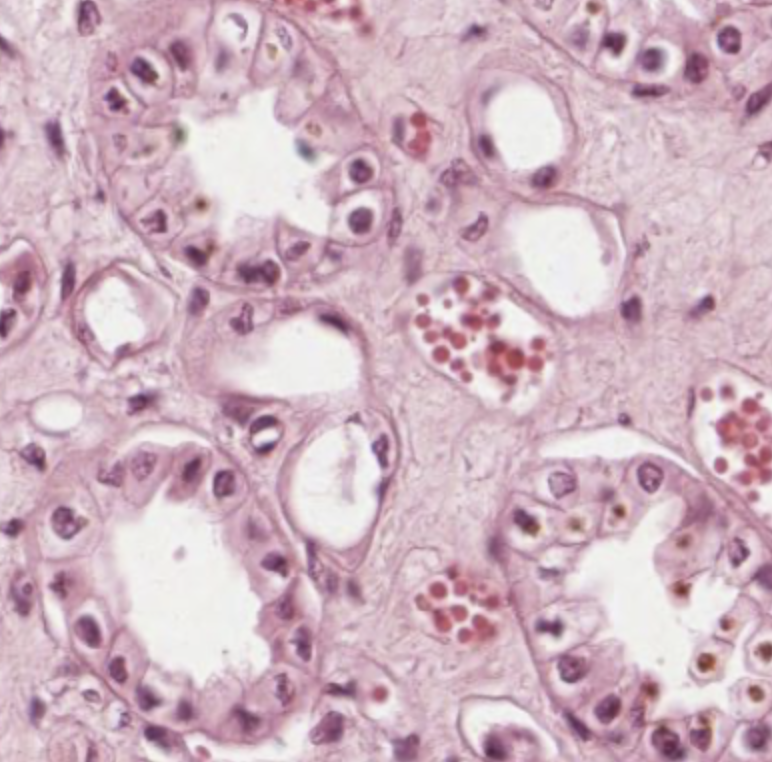
In simple cuboidal epithelium, some cells have microvilli or cilia and the nucleus appears round and centered. Simple cuboidal epithelia can be found in kidney tubules, in the ducts of glands, etc.
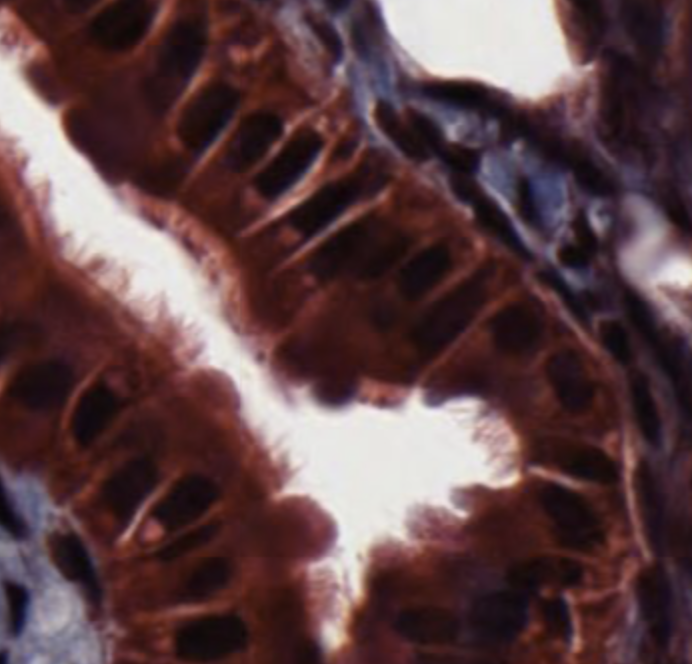
In simple columnar epithelium, the nucleus, located closer to the basal surface, tends to be elongated due to the tall column-like cells. One of their functions is to absorb and secrete molecules. They form the lining of some sections of the digestive system, the uterus and uterine tubes. Some cells have cilia that are partially responsible for the movement of particulate matter.
Stratified squamous epithelium is characterized by multiple layers of cells. The cells of its surface layer are squamous in shape and tend to become cuboidal as you go underneath the surface. Stratified squamous epithelia can be either be keratinized or nonkeratinized. In keratinized epithelium, primarily found in the skin, the surface layer is replaced by keratin. Nonkeratonized epithelium can be found in the vagina, oral cavities, and the esophagus.

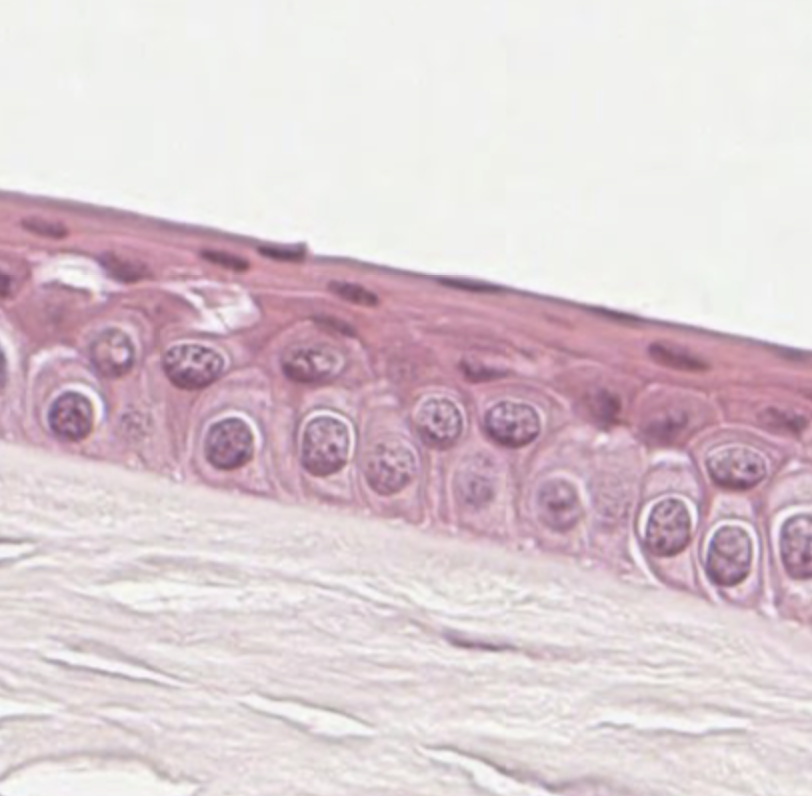
Stratified cuboidal epithelium has multiple layers of cube-shaped cells.
Stratified columnar epithelium consists of a columnar cells resting on top of layers of cube-shaped cells.


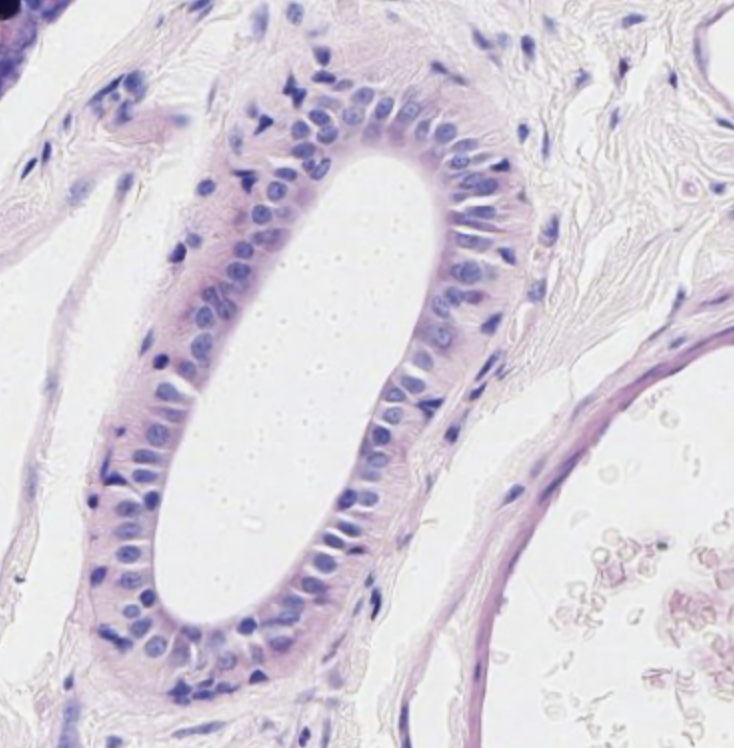
Both stratified cuboidal and stratified columnar epithelia are not common. They are found primarily in the ducts of salivary glands and ducts of the eccrine sweat glands. They serve to protect and have secretory functions.
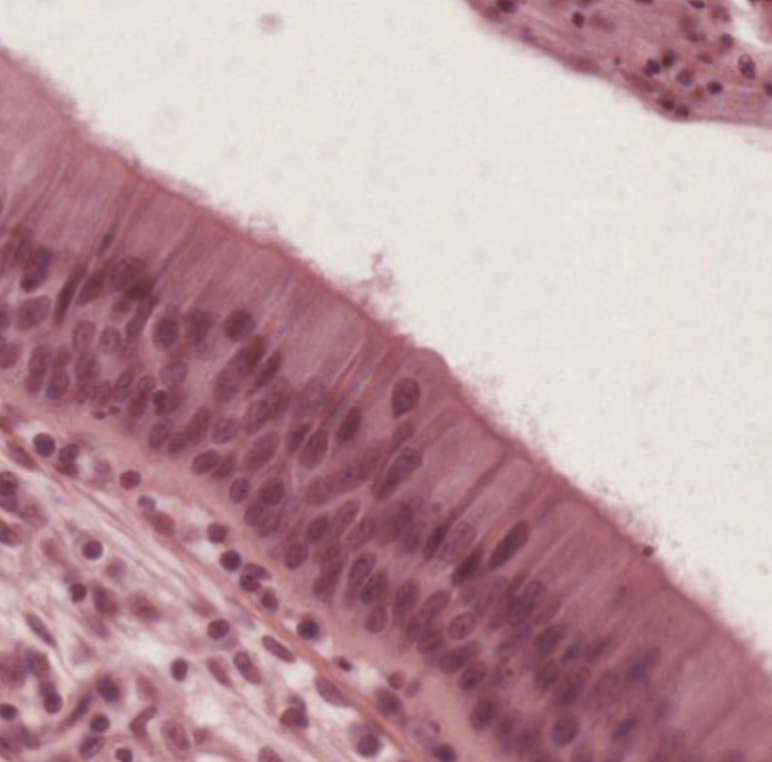
Pseudostratified ciliated columnar epithelia are found almost exclusively in the respiratory system. Some cells are tall and thin and reach the surface; others do not. The nuclei are at different levels. This epithelium provides protection and is associated with goblet cells that secrete mucus.
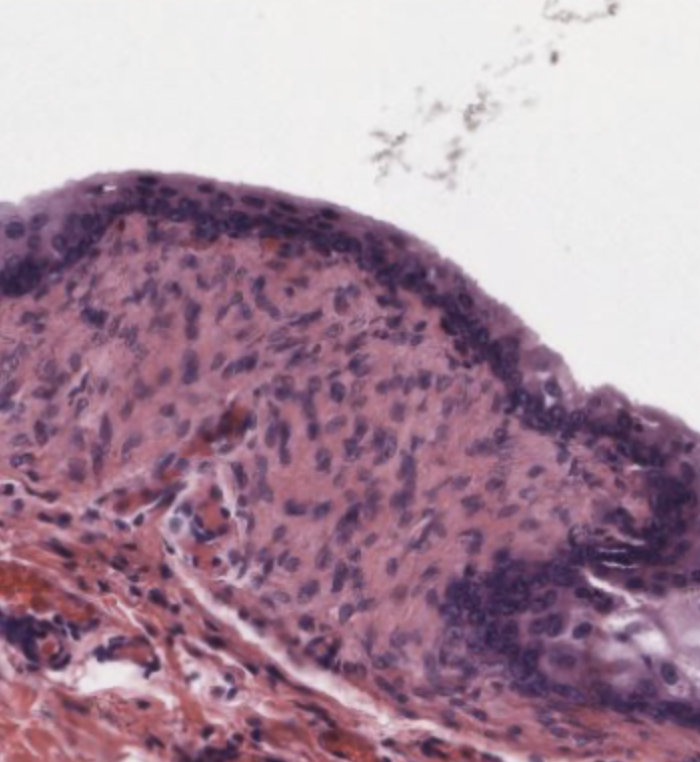
Transitional epithelium are stratified cells that appear cube-shaped when tissue or organ is not stretched. They become squamous-looking when stretched. They are exclusively found in the urinary tract. They serve as the lining of the bladder, the ureters, pelvis of the kidney, and parts of the urethra.

Having covered epithelial tissues, I would like to share an interesting recent experience. A few days ago, I took a cytology exam as part of a routine health check-up. Coincidentally, I had just read about epithelial tissues before the exam, and it was quite surprising to discover that the exam focused on urothelial (transitional) cells. It is fascinating to see how recent knowledge can directly apply to real-world situations. Alternatively, this could just have been what they call frequency illusion aka Baader-Meinhof phenomenon where humans tend to notice more about something after learning or being more aware of it.
That said, I would like to share a popular quote from HBO’s Chernobyl that resonates with my current health eval:

Bye for now.